
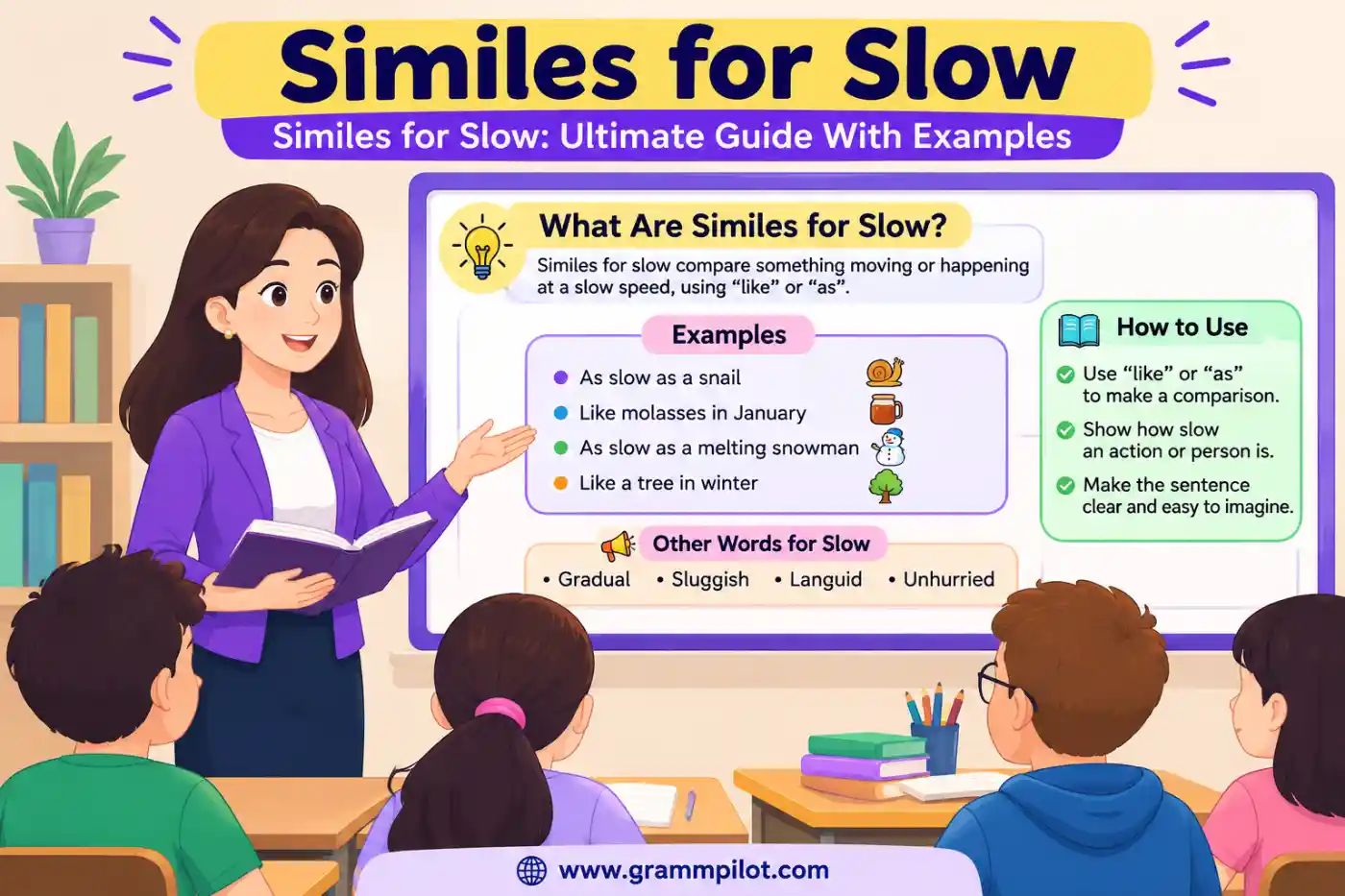
Have you ever written an essay, email, story, or text and wanted a better way to describe someone or something moving at a slow pace? That’s when Similes for Slow can make your writing more vivid and interesting. Instead of repeating the word slow, you can use creative comparisons that help readers picture the speed more clearly. Many students, writers, and English learners search for Similes for Slow because they want stronger descriptions without sounding repetitive. A good simile adds detail, creates a clear image, and makes your writing easier to remember.
Answer Box
Similes for Slow compare a person, animal, object, or action to something known for moving or happening slowly by using the words “like” or “as.” They make writing more descriptive and help readers imagine the pace more clearly.
Whether you’re writing a school assignment, speech, story, poem, or social media post, the right comparison can improve your writing. This guide explains what these similes mean, where they came from, how to use them correctly, and how to choose the best one for every situation.
For a deeper look at a similar grammar issue, read [Simpler vs More Simple].
Similes for Slow: What Are They?
Similes for Slow are comparisons that describe something moving, happening, or changing at a slow pace by using the words like or as.
Instead of saying: The turtle moved slowly.
You could write:
- The turtle moved as slowly as a snail.
- The traffic crawled like a sleepy caterpillar.
- Time passed as slowly as melting ice.
These comparisons help readers imagine the speed instead of simply reading the word slow. A simile compares two different things to make an idea easier to understand.
Examples include:
- as slow as a snail
- as slow as molasses
- like a turtle crossing the road
- as steady as a glacier
Each comparison creates a stronger mental picture than simply saying something was slow.
Similes for Slow: What Does “Slow” Really Mean?
Before learning different comparisons, it’s helpful to understand the word itself.
Slow usually means:
- moving without speed
- taking a long time
- happening gradually
- not rushing
- delayed
- unhurried
The word can describe many different situations.
For example:
- a slow runner
- a slow computer
- slow traffic
- slow music
- a slow learner
- slow growth
Sometimes slow has a positive meaning.
Examples include:
- enjoying a slow morning
- taking slow, careful steps
- cooking food over slow heat
- making slow but steady progress
In other situations, it may describe delays or poor performance. The meaning depends on the context. That’s why choosing the right simile is important.
Similes for Slow: Word Origin and Plain-English Meaning
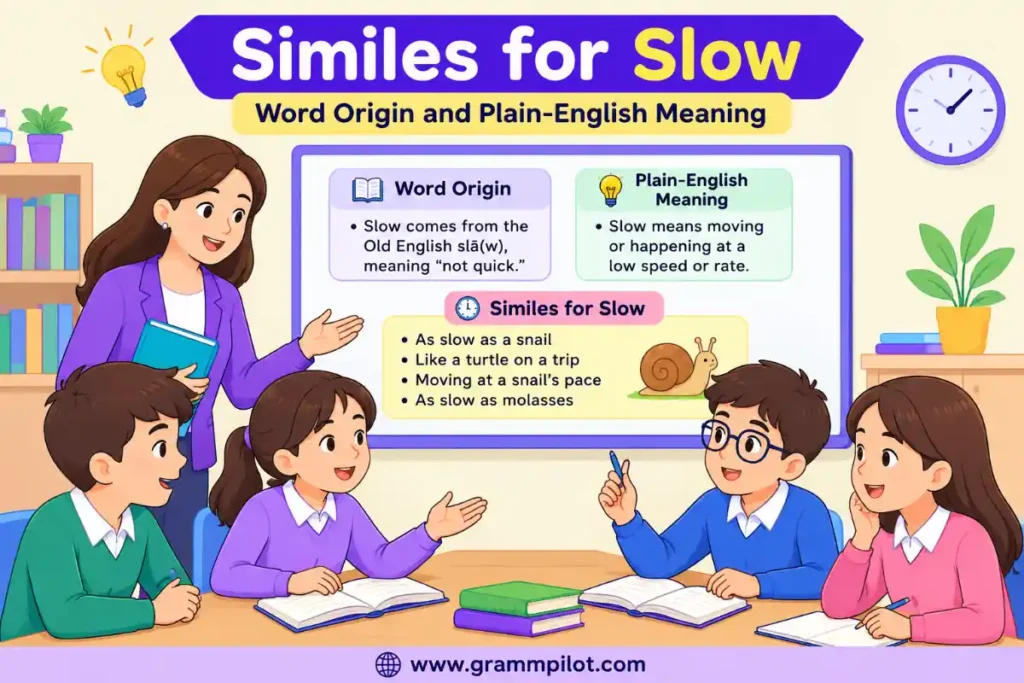
Many articles explain only the examples, but understanding the history of the word gives you a deeper understanding. The word slow comes from the Old English word slāw, meaning lazy, inactive, or moving without speed. Over time, its meaning became broader. Today, it describes movement, progress, thinking, growth, and many other actions that happen gradually instead of quickly. The word simile comes from the Latin word similis, meaning similar or like. That’s why similes always compare one thing with another.
Examples include:
- as slow as a snail
- like honey pouring from a jar
- as slow as a glacier
- like autumn leaves drifting to the ground
Each comparison creates a stronger image than using the word slow by itself.
Similes for Slow: Why Do Writers Use Them?
Readers remember pictures better than plain descriptions.
Compare these two examples.
Plain sentence
- The car moved slowly.
With a simile
- The car moved as slowly as a turtle climbing a hill.
The second sentence helps readers picture exactly how slowly the car was moving.
Writers use similes because they:
- make descriptions more vivid
- improve storytelling
- create memorable images
- avoid repeating the same words
- help readers imagine scenes
- make essays and speeches more engaging
You’ll find similes in:
- novels
- poems
- speeches
- classroom essays
- children’s books
- advertisements
- songs
- everyday conversations
Similes for Slow: How Does a Simile Work?
Every simile has three simple parts.
| Part | Example |
|---|---|
| Person, place, or thing | The river |
| Comparison word | as |
| Image | as slow as a sleepy turtle |
Another example:
| Part | Example |
|---|---|
| Thing | Traffic |
| Comparison word | like |
| Image | like molasses flowing downhill |
The comparison helps readers picture the speed more clearly.
Similes for Slow: Why Are Similes Better Than Simply Saying “Slow”?
Imagine describing traffic during rush hour.
Version one: Traffic was slow.
Version two: Traffic moved like a long line of turtles crossing the road.
Which sentence creates a better picture? Most readers choose the second one because it helps them imagine the scene.
Good similes:
- make writing memorable
- improve creative descriptions
- strengthen storytelling
- add emotion
- help readers visualize ideas
That’s why teachers often encourage students to use similes in descriptive writing.
Similes for Slow: When Should You Use Them?
These comparisons work well in many kinds of writing.
Common examples include:
- school essays
- stories
- speeches
- poems
- journals
- novels
- blogs
- creative writing assignments
- social media captions
Examples:
- The clouds drifted as slowly as floating feathers.
- The old clock ticked like a tired heartbeat.
- Winter arrived as slowly as falling snow.
Each comparison creates a stronger mental image.
Similes for Slow: Can You Create Your Own Similes?
Absolutely. Many of the best comparisons are original. Think about things people naturally connect with moving slowly.
Ideas include:
- snails
- turtles
- glaciers
- sloths
- melting ice
- dripping honey
- growing trees
- floating clouds
- falling leaves
- winding rivers
Then connect the image using as or like.
Examples:
- as slow as sunrise on a winter morning
- like paint drying on a wall
- as slow as moss growing on a rock
- like a leaf drifting across a quiet lake
- as steady as an old tortoise
Creative comparisons often make your writing stand out.
Similes for Slow: What Makes a Good Simile?
Not every comparison works well.
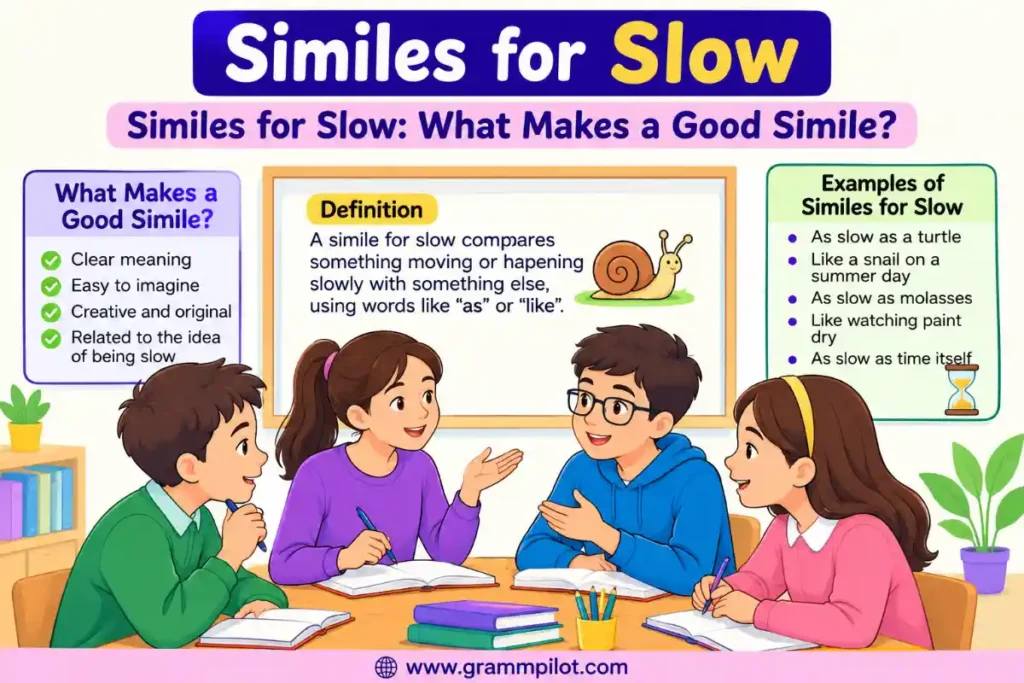
A strong simile should be:
- easy to understand
- meaningful
- natural
- memorable
- suitable for the audience
Compare these examples.
Good: He walked as slow as a snail.
Better: She moved like a glacier carving its way through a valley.
Poor: He was as slow as a microwave.
The last example feels confusing because microwaves are associated with speed, not slowness. Readers understand comparisons more easily when they connect with familiar experiences.
Similes for Slow: Common Themes Used in Comparisons
Writers often choose images that naturally suggest slow movement or gradual progress.
Animals
- snails
- turtles
- sloths
- caterpillars
- tortoises
Nature
- glaciers
- rivers
- clouds
- melting snow
- growing trees
Everyday Objects
- dripping honey
- hourglasses
- old clocks
- candles burning
- drying paint
Weather
- falling snow
- gentle rain
- morning fog
- drifting mist
Time
- seasons changing
- sunrise
- sunset
- aging trees
- growing plants
These familiar images help readers quickly understand the pace being described.
Similes for Slow: Why Do They Improve Your Writing?
Readers enjoy writing that creates vivid pictures.
Compare these examples.
- The train moved slowly.
- The train moved like a giant turtle carrying a heavy shell.
Another example:
- Time passed slowly.
- Time passed as slowly as melting snow beneath a cloudy sky.
The second sentence in each pair creates a stronger image and keeps readers interested.
That’s why Similes for Slow appear so often in stories, poems, speeches, novels, and descriptive essays.In the next part, you’ll discover a master collection of Similes for Slow, grouped by tone and meaning, along with related vocabulary, context-based recommendations, regional notes, and practical guidance for choosing the best comparison in every situation.
Similes for Slow: Original Example Sentences
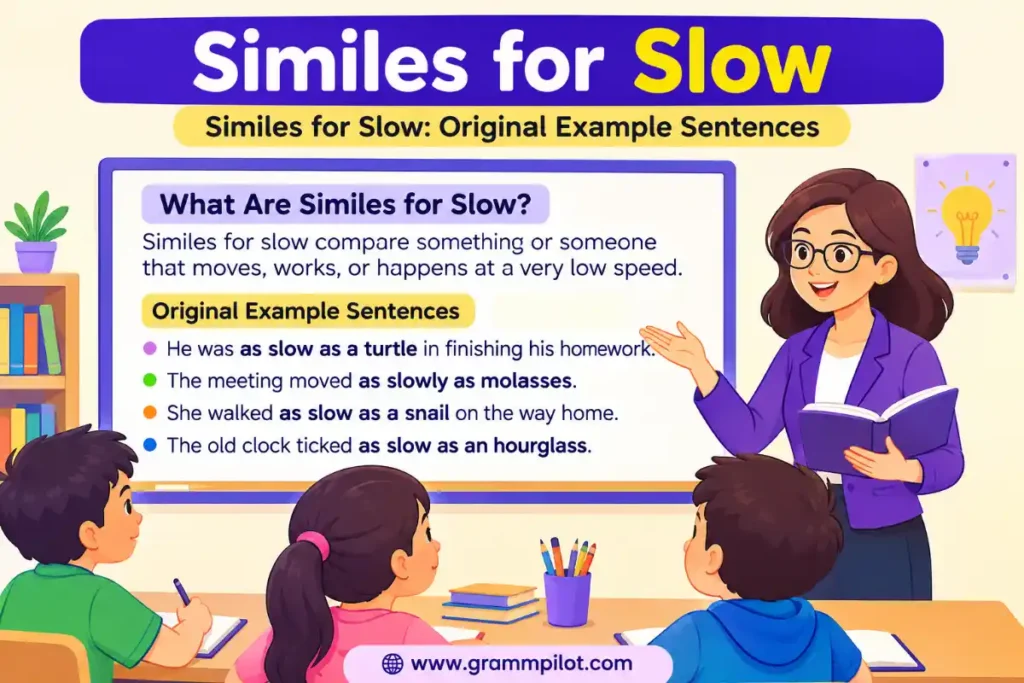
The easiest way to understand Similes for Slow is by seeing them in real-life situations. These examples show how a simple comparison can make your writing more colorful and memorable.
- The old turtle walked as slow as a snail climbing a hill.
- Traffic moved like a long train crawling through the city.
- Time passed as slowly as melting ice on a cold day.
- The river flowed like a ribbon drifting across the valley.
- My internet worked as slow as paint drying on a wall.
- The child climbed the stairs like a sleepy sloth.
- The clouds floated as slowly as feathers in the wind.
- The parade moved like a giant turtle crossing the road.
- The old man walked as steadily as a tortoise on a quiet path.
- The candle burned as slowly as an hourglass emptying grain by grain.
- The train rolled forward like a heavy cart climbing a steep hill.
- The leaves drifted as slowly as snowflakes falling from the sky.
- The class ended like the last minutes of a long meeting.
- The glacier moved as patiently as time itself.
- The fog disappeared like smoke rising into the morning air.
- The boat floated as gently as a leaf on calm water.
- The project progressed like an old clock ticking through the night.
- The cat stretched as slowly as the morning sunrise.
- The elevator climbed like a tired turtle carrying a heavy shell.
- The line at the ticket counter moved as slowly as dripping honey.
These examples help readers picture slow movement instead of simply reading the word slow.
Similes for Slow: Before-and-After Examples
A simile can turn an ordinary sentence into a memorable one.
| Plain Sentence | Improved with a Simile |
|---|---|
| The car was slow. | The car moved as slow as a turtle climbing a hill. |
| Time passed slowly. | Time passed like melting ice under cloudy skies. |
| The river moved slowly. | The river flowed like a lazy ribbon across the land. |
| The worker was slow. | The worker moved as steadily as a tortoise. |
| Traffic was slow. | Traffic crawled like a line of sleepy caterpillars. |
| The clouds moved slowly. | The clouds drifted like feathers in the breeze. |
| The meeting felt long. | The meeting passed as slowly as paint drying. |
| The train moved slowly. | The train rolled like a heavy wagon climbing uphill. |
The improved sentences help readers imagine the speed instead of simply reading about it.
Similes for Slow: “As Slow as a Snail” vs. “As Slow as a Turtle”
Both comparisons describe slow movement, but they are slightly different.
| As Slow as a Snail | As Slow as a Turtle |
|---|---|
| Suggests extremely slow movement. | Suggests steady and careful movement. |
| Often used humorously. | Often sounds calmer and more natural. |
| Focuses on speed. | Focuses on patience and consistency. |
Examples:
- The line moved as slow as a snail.
- She walked as slow as a turtle through the museum.
Choose the one that best matches the situation.
Similes for Slow: “Like Paint Drying” vs. “As Slow as a Glacier”
These two comparisons also describe different kinds of slowness.
| Like Paint Drying | As Slow as a Glacier |
|---|---|
| Describes something boring or frustrating. | Describes something naturally slow over time. |
| Often used in casual conversation. | Often used in formal or descriptive writing. |
| Suggests waiting feels endless. | Suggests gradual but steady progress. |
Examples:
- Waiting for the results felt like paint drying.
- Recovery happened as slow as a glacier.
Using the right comparison makes your writing more accurate.
Similes for Slow: Common Mistakes
Many writers make simple mistakes when using similes.
Mistake 1: Choosing the Wrong Comparison
❌ He moved as slow as lightning.
✅ He moved as slow as a snail.
Lightning is fast, so the comparison doesn’t make sense.
Mistake 2: Using Too Many Similes Together
❌ The train moved like a turtle, like honey, like a glacier, and like paint drying.
✅ The train moved as slow as a glacier.
One strong comparison is usually enough.
Mistake 3: Repeating the Same Simile
Avoid writing as slow as a snail over and over. Use different comparisons to keep your writing fresh.
Mistake 4: Using Similes in Technical Documents
Instruction manuals, business reports, and scientific papers usually need direct language.
Instead of writing: The process moved like a sleepy turtle.
Write: The process progressed slowly.
Mistake 5: Choosing Unfamiliar Images
Readers understand common comparisons more easily than unusual ones.
Choose images that most people recognize.
Similes for Slow: When Should You Avoid Using Them?
Although Similes for Slow improve creative writing, they aren’t suitable for every situation.
Avoid them in:
- legal contracts
- engineering reports
- scientific papers
- medical records
- financial documents
- technical manuals
Creative comparisons work much better in:
- stories
- speeches
- poems
- essays
- blogs
- novels
- journals
- children’s books
Similes for Slow: Antonyms
Learning opposite words strengthens your vocabulary.
| Word | Opposite Meaning |
|---|---|
| Fast | Moving quickly |
| Quick | Done rapidly |
| Rapid | Very fast |
| Swift | Smooth and fast |
| Speedy | High speed |
| Instant | Happening immediately |
| Immediate | Without delay |
| Hasty | Done quickly |
| Brisk | Active and quick |
| Accelerated | Increased speed |
Knowing opposite words helps you choose the right description for every situation.
Similes for Slow: Quick Tips for Choosing the Best Simile
Keep these simple ideas in mind.
- Match the comparison to your topic.
- Use familiar images readers recognize.
- Keep your similes short and natural.
- Avoid using several comparisons in one sentence.
- Don’t repeat the same simile throughout your writing.
- Choose humorous comparisons only when they fit the tone.
- Read your sentence aloud to check how it sounds.
- Pick images your audience will understand.
- Save detailed comparisons for stories and speeches.
- Use simple similes in school writing.
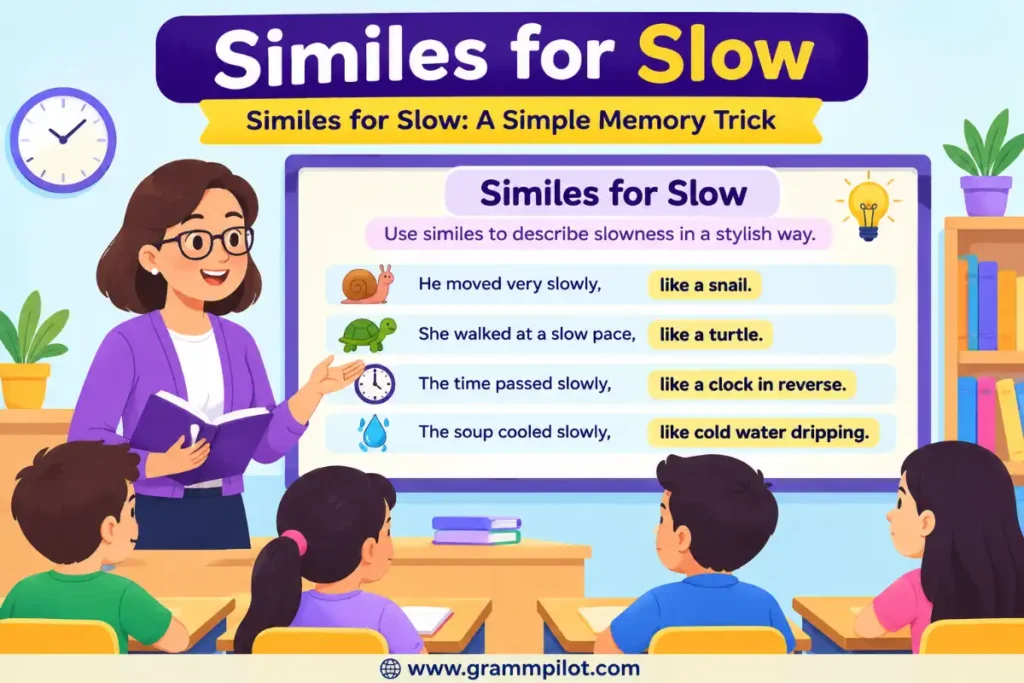
Similes for Slow: A Simple Memory Trick
Think about things people naturally connect with moving slowly.
Most people picture:
- snails
- turtles
- sloths
- glaciers
- dripping honey
- falling snow
- floating leaves
- old clocks
Ask yourself one simple question: What object or animal naturally moves at the same pace I’m describing?
Your answer becomes your simile.
Examples:
- as slow as a snail
- like honey pouring from a jar
- as slow as a glacier
- like a leaf floating downstream
- as steady as a tortoise
- like paint drying on a wall
This simple method will help you create original Similes for Slow that sound natural and make your writing more descriptive.
Conclusion
Using Similes for Slow is an easy way to make your writing more vivid and engaging. Instead of repeating the word slow, you can compare people, animals, objects, or actions to familiar images such as as slow as a snail, as slow as a glacier, or like honey pouring from a jar. These comparisons help readers picture the pace clearly and add more life to your descriptions.
Whether you’re writing a school essay, story, speech, poem, or social media post, the right simile can make your message stronger and more memorable. Choose comparisons that fit the situation, keep them natural, and avoid overusing the same one. With regular practice, Similes for Slow will become a valuable part of your vocabulary and help you write with greater confidence.
Frequently Asked Questions
1. What are Similes for Slow?
Similes for Slow are comparisons that describe slow movement or gradual progress by using the words like or as. They make writing more descriptive and easier to imagine.
2. What is the best simile for slow?
There isn’t one perfect simile for every situation. Popular choices include as slow as a snail, as slow as a turtle, like paint drying, and as slow as a glacier.
3. What’s another way to say something is slow?
You can use words such as sluggish, gradual, leisurely, steady, unhurried, delayed, or crawling. A simile often makes the description even more vivid.
4. Can I use similes in school essays?
Yes. Similes make essays more interesting when they fit naturally with your topic. Choose comparisons that are easy for your readers to understand.
5. Are similes and metaphors the same?
No. A simile compares two things using like or as, while a metaphor describes one thing as another without using those comparison words.
6. Can I create my own similes?
Absolutely. Think of animals, objects, or natural events that people connect with slow movement, then link them with like or as. Original similes can make your writing more memorable.
7. Why do writers use Similes for Slow?
Writers use Similes for Slow because they create stronger mental images, avoid repetition, and help readers understand the pace or movement more clearly.