
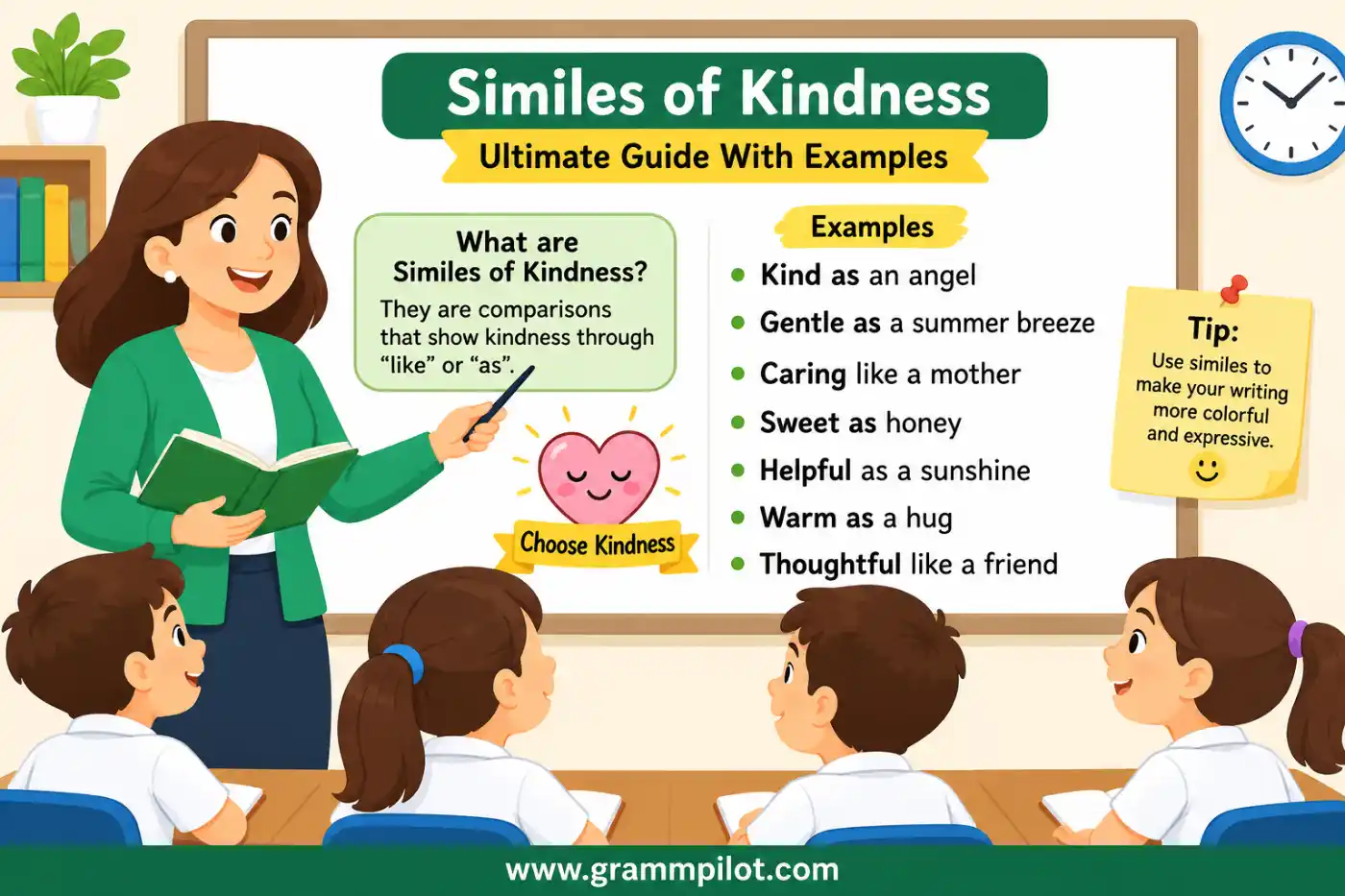
Have you ever written an essay, birthday card, email, or text and wanted to describe someone as kind, caring, or generous? That’s when Similes of Kindness become useful. A well-chosen simile paints a clear picture and helps your writing sound more natural, creative, and memorable. Many students, writers, and English learners search for Similes of Kindness because they want better ways to describe a gentle person without repeating words like kind or nice. A good comparison can make even a simple sentence feel more vivid.
Answer Box
Similes of kindness compare a person’s caring nature to something familiar using words like “as” or “like.” They help readers imagine kindness more clearly and make writing more expressive.
Whether you’re writing a school assignment, a speech, a story, or a social media caption, the right comparison can make your message stronger. In this guide, you’ll learn what these similes mean, where they came from, how to use them correctly, and how to choose the best one for every situation.
For another collection of creative expressions, explore [Similes for Perfect].
Similes of Kindness: What Are They?
Similes of Kindness are comparisons that describe someone’s gentle, thoughtful, or helpful nature by using the words like or as.
Instea d of saying:She is kind.
You can write:
- She is as gentle as a lamb.
- He is as warm as the morning sun.
- She is like a helping hand when people need her most.
The second version creates a stronger image. Readers can picture the person’s personality instead of simply being told about it. A simile always compares two different things in a simple and easy-to-understand way.
Examples include:
- as soft as cotton
- as caring as a loving parent
- like sunshine after rain
- as comforting as a warm blanket
These comparisons make writing more colorful while keeping the meaning clear.
Similes of Kindness: What Does “Kindness” Really Mean?
Before learning different comparisons, it helps to understand the word itself. Kindness means showing care, respect, generosity, and concern for other people.
A kind person often:
- helps others
- speaks politely
- listens carefully
- forgives mistakes
- shares with others
- offers support
- treats everyone fairly
- shows patience
Kindness isn’t always about giving gifts.
Sometimes it means:
- smiling at someone
- holding a door open
- encouraging a friend
- helping a classmate
- comforting someone who feels sad
That’s why writers often use similes to describe these actions more clearly.
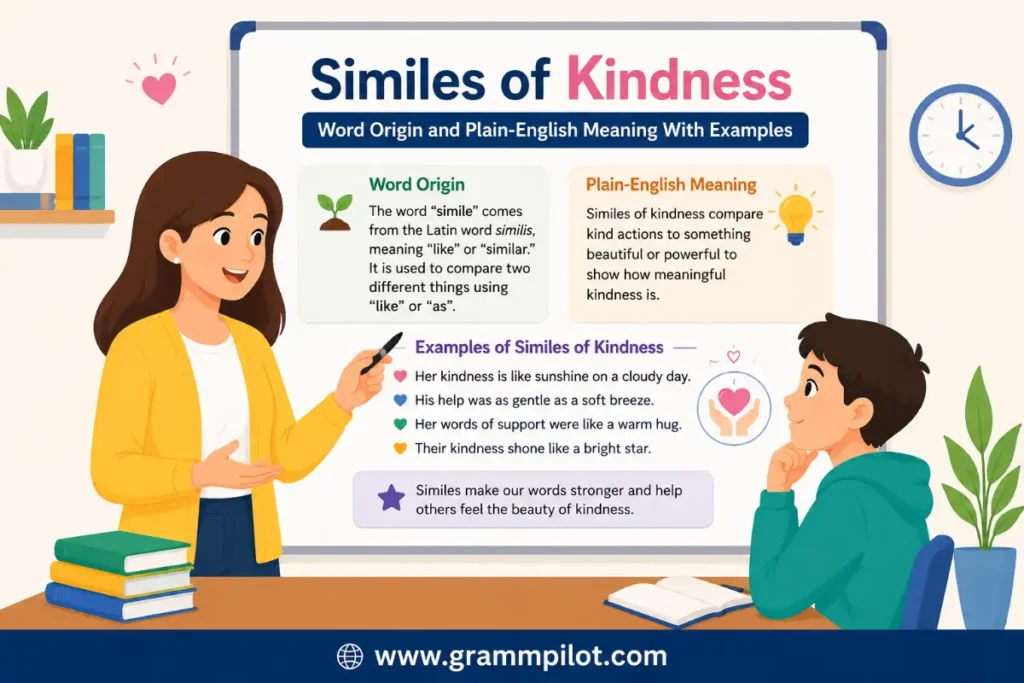
Similes of Kindness: Word Origin and Plain-English Meaning
Most articles jump straight into examples, but knowing where the word comes from helps you understand it better. The word kindness comes from the Old English word cynd, which originally meant nature, family, or natural character. Over time, the meaning changed. Instead of describing someone’s family or background, it began to describe a person’s gentle and caring behavior toward others. Today, kindness means treating people with warmth, respect, compassion, and generosity. The word simile has an interesting history too. It comes from the Latin word similis, meaning similar or like. That explains why similes compare one thing to another.
For example:
- as gentle as a dove
- like a ray of sunshine
- as patient as a saint
Each comparison helps readers picture kindness in a simple way.
Similes of Kindness: Why Do Writers Use Them?
A sentence becomes more interesting when readers can imagine what you’re describing. Compare these two examples.
Plain sentence
- My grandmother is kind.
With a simile
- My grandmother is as warm as sunshine on a winter morning.
The second sentence creates a picture in the reader’s mind.
Writers use similes because they help readers:
- understand emotions
- remember descriptions
- picture characters
- enjoy stories
- connect with ideas
You’ll find similes in:
- novels
- poems
- speeches
- children’s books
- school essays
- greeting cards
- movies
- everyday conversations
Similes of Kindness: How Does a Simile Work?
Every simile has three simple parts.
| Part | Example |
|---|---|
| Person or thing | My teacher |
| Comparison word | as |
| Image | as patient as a gardener |
Another example:
| Part | Example |
|---|---|
| Person | My neighbor |
| Comparison word | like |
| Image | like a guiding light |
The comparison makes the description stronger without changing its meaning.
Similes of Kindness: Why Are Similes Better Than Plain Descriptions?
Imagine you’re describing two friends.
Friend One: She is kind.
Friend Two: She is as gentle as a spring breeze.
Which one is easier to picture?
Most readers choose the second sentence because it creates an image.
Good similes:
- add emotion
- improve storytelling
- make essays more interesting
- help speeches sound memorable
- keep readers engaged
That is why teachers often encourage students to use comparisons in creative writing.
Similes of Kindness: When Should You Use Them?
You can use these comparisons almost anywhere.
Common situations include:
- school essays
- stories
- speeches
- emails
- thank-you notes
- birthday cards
- poems
- personal journals
- social media posts
- classroom presentations
Examples:
- Our coach was as encouraging as a trusted friend.
- My mother is like sunshine on a cloudy day.
- His words were as comforting as a warm blanket.
Each sentence feels more expressive than simply saying someone was kind.
Similes of Kindness: Can You Create Your Own Similes?
Yes.
Many of the best comparisons are original. Start by thinking about something people naturally connect with kindness.
Examples include:
- sunshine
- flowers
- soft rain
- warm blankets
- caring parents
- helpful neighbors
- gentle birds
- calm rivers
- bright stars
- welcoming smiles
Then connect the image using as or like.
For example:
- as welcoming as an open door
- like fresh rain after a long drought
- as comforting as a favorite book
- like a candle lighting a dark room
- as dependable as the sunrise
Original comparisons often make your writing stand out.
Similes of Kindness: What Makes a Good Simile?
Not every comparison works well.
A good simile should be:
- easy to understand
- natural
- meaningful
- memorable
- appropriate for the audience
Compare these examples.
Good: She is as gentle as a dove.
Better: He is like a lighthouse guiding lost sailors home.
Poor: She is as kind as a calculator.
The last example feels confusing because calculators are not normally associated with kindness. Readers understand comparisons more easily when they connect with everyday experiences.
Similes of Kindness: Common Themes Used in Comparisons
Writers often choose images that naturally suggest warmth and care.
Popular themes include:
Nature
- sunshine
- flowers
- rivers
- trees
- rainbows
- birds
- butterflies
Family
- parents
- grandparents
- older siblings
Home
- warm blankets
- fireplaces
- fresh bread
- welcoming doors
- comfortable chairs
Animals
- lambs
- doves
- golden retrievers
- horses
- robins
- swans
Light
- candles
- stars
- lanterns
- morning sunlight
These images help readers immediately understand the feeling the writer wants to create.
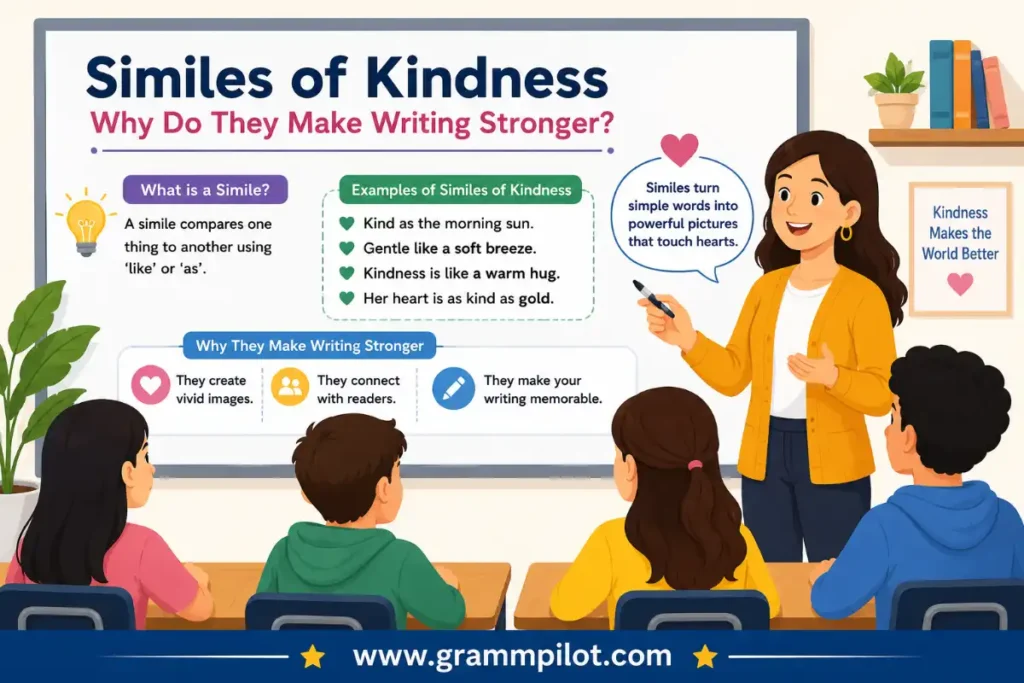
Similes of Kindness: Why Do They Make Writing Stronger?
Readers remember pictures more easily than simple facts. Instead of saying someone is caring, a well-written simile helps readers feel that kindness.
Compare these examples.
- The nurse was kind.
- The nurse was as calming as gentle ocean waves.
Another example:
- My teacher was helpful.
- My teacher was like a bridge leading every student toward success.
The second sentence in each pair creates a stronger emotional connection. That’s why Similes of Kindness appear so often in stories, speeches, poems, and personal writing.
Similes of Kindness: Master List of the Best Similes
Learning Similes of Kindness is easier when you have a collection of ready-to-use comparisons. Some sound gentle and warm, while others are more poetic or formal. The following lists include simple, everyday, formal, and creative similes you can use in essays, speeches, stories, and conversations.
Simple Similes of Kindness
| Simile | Meaning | Tone | Example |
|---|---|---|---|
| As kind as a friend | Very caring | Simple | She is as kind as a friend who never leaves your side. |
| As gentle as a lamb | Calm and caring | Simple | He was as gentle as a lamb with the puppy. |
| As warm as the sun | Friendly and welcoming | Simple | Her smile was as warm as the sun. |
| As soft as cotton | Gentle in words and actions | Simple | Grandma’s voice was as soft as cotton. |
| Like a helping hand | Always ready to help | Simple | My brother is like a helping hand whenever I need him. |
| As sweet as honey | Pleasant and thoughtful | Simple | The little girl was as sweet as honey. |
| Like a caring parent | Loving and protective | Simple | Our coach was like a caring parent. |
| As calm as still water | Peaceful and patient | Simple | She remained as calm as still water during the emergency. |
Everyday Similes of Kindness
| Simile | Meaning | Tone | Example |
|---|---|---|---|
| Like sunshine after rain | Brings comfort and hope | Everyday | His words were like sunshine after rain. |
| As welcoming as an open door | Friendly to everyone | Everyday | The neighbors were as welcoming as an open door. |
| Like a warm blanket | Comforting | Everyday | Her hug felt like a warm blanket. |
| As bright as morning light | Cheerful and encouraging | Everyday | His kindness was as bright as morning light. |
| Like fresh air | Refreshing and uplifting | Everyday | Talking with her is like fresh air. |
| As peaceful as a quiet garden | Gentle and relaxing | Everyday | She stayed as peaceful as a quiet garden. |
| Like a gentle breeze | Soft and comforting | Everyday | His voice was like a gentle breeze. |
| As dependable as sunrise | Always there | Everyday | Dad is as dependable as sunrise. |
Formal Similes of Kindness
| Simile | Meaning | Tone | Example |
|---|---|---|---|
| Like a guiding light | Offers support | Formal | The teacher was like a guiding light. |
| As generous as a faithful friend | Gives freely | Formal | She remained as generous as a faithful friend. |
| Like a beacon of hope | Inspires others | Formal | The volunteer became like a beacon of hope. |
| As comforting as home | Makes others feel safe | Formal | His advice was as comforting as home. |
| Like an angel | Deeply compassionate | Formal | The nurse cared for everyone like an angel. |
| As patient as a saint | Extremely patient | Formal | He listened as patiently as a saint. |
| Like a shelter in a storm | Protects others | Formal | Their support was like a shelter in a storm. |
| As steady as an old oak | Reliable and caring | Formal | She remained as steady as an old oak. |
Creative and Informal Similes of Kindness
| Simile | Meaning | Tone | Example |
|---|---|---|---|
| Like hot chocolate on a cold day | Comforting | Casual | Grandpa is like hot chocolate on a cold day. |
| As cheerful as spring flowers | Happy and kind | Casual | She looked as cheerful as spring flowers. |
| Like a favorite song | Makes people happy | Casual | Your friendship is like a favorite song. |
| As welcoming as a family dinner | Friendly | Casual | Their home was as welcoming as a family dinner. |
| Like a candle in the dark | Gives hope | Casual | Her encouragement was like a candle in the dark. |
| As refreshing as cool rain | Brings relief | Casual | His kindness felt as refreshing as cool rain. |
| Like a smiling sunrise | Full of warmth | Casual | She entered the room like a smiling sunrise. |
| As comforting as grandma’s kitchen | Warm and familiar | Casual | The café felt as comforting as grandma’s kitchen. |
These examples show that Similes of Kindness can describe many different types of caring behavior, from gentle support to lasting encouragement.
Similes of Kindness: Similar Words by Intensity
Some words describe small acts of kindness. Others suggest deep compassion and generosity.
| Mild | Moderate | Strong |
|---|---|---|
| Nice | Caring | Compassionate |
| Friendly | Helpful | Generous |
| Pleasant | Thoughtful | Selfless |
| Polite | Supportive | Merciful |
| Gentle | Warm-hearted | Loving |
| Patient | Considerate | Kindhearted |
| Calm | Understanding | Benevolent |
| Cheerful | Gracious | Charitable |
As the intensity increases, the words express greater emotional warmth and generosity.
Similes of Kindness: Related Words by Part of Speech
Knowing related vocabulary helps you avoid repeating the same word.
Nouns
- Kindness
- Compassion
- Generosity
- Care
- Mercy
- Sympathy
- Goodness
- Warmth
- Support
- Friendship
Verbs
- Help
- Comfort
- Encourage
- Protect
- Share
- Care
- Support
- Forgive
- Welcome
- Respect
Adjectives
- Kind
- Caring
- Gentle
- Compassionate
- Friendly
- Helpful
- Warm-hearted
- Thoughtful
- Considerate
- Generous
These words work well alongside Similes of Kindness in essays, speeches, and stories.
Similes of Kindness: Are They Different in American and British English?
There is very little difference. Most Similes of Kindness are understood the same way in both American and British English because they use familiar images from everyday life.
Examples that sound natural in both varieties include:
- As gentle as a lamb.
- Like sunshine after rain.
- As warm as a fireplace.
- Like a helping hand.
- As patient as a saint.
Some comparisons may reflect local culture. For example, American writers may compare kindness to a welcoming front porch, while British writers might compare it to a warm cup of tea. Even so, the meaning stays the same.
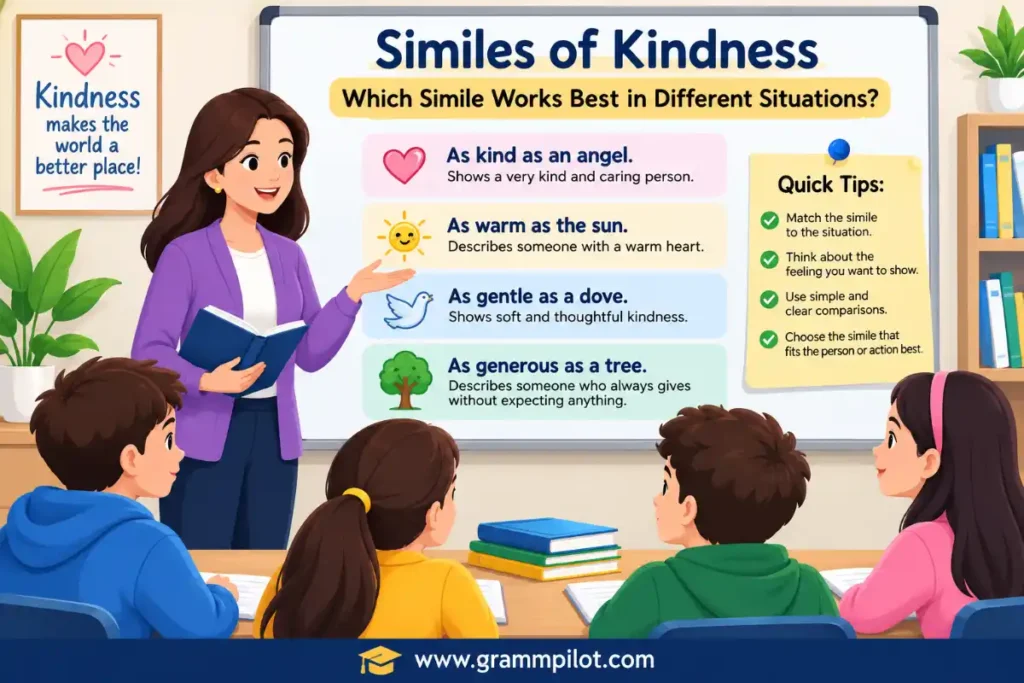
Similes of Kindness: Which Simile Works Best in Different Situations?
Choosing the right comparison depends on where you’re writing.
Similes of Kindness in a School Essay
Teachers usually prefer clear and familiar comparisons.
Examples:
- She was as gentle as a lamb.
- His words were like sunshine after rain.
These similes are easy to understand and fit most academic writing.
Similes of Kindness in a Story
Stories allow more imagination.
Examples:
- The old woman was like a lighthouse guiding lost travelers.
- His kindness spread like morning sunlight across the valley.
Creative images make characters feel more memorable.
Similes of Kindness in an Email
Professional emails should use simple comparisons if you choose to include one.
Example:
- Your support has been like a helping hand during this project.
Avoid overly dramatic comparisons in business writing.
Similes of Kindness in a Speech
Speeches benefit from emotional language.
Examples:
- Our volunteers have been like candles lighting the darkest nights.
- Every teacher here has been as patient as a gardener growing young trees.
These comparisons create strong emotional connections with listeners.
Similes of Kindness in Everyday Conversation
Simple expressions sound the most natural.
Examples:
- She’s as sweet as honey.
- He’s like sunshine on a cloudy day.
- Grandma is as gentle as a lamb.
Short comparisons are easier to remember and use in daily conversations.
Similes of Kindness: Which Simile Should You Choose?
The best simile depends on the message you want to share.
| Situation | Best Simile |
|---|---|
| Describing a caring friend | Like a helping hand |
| Describing a gentle person | As gentle as a lamb |
| Describing a comforting person | Like a warm blanket |
| Describing a supportive teacher | Like a guiding light |
| Describing a loving parent | As warm as the sun |
| Describing a generous volunteer | Like a beacon of hope |
| Describing a patient leader | As patient as a saint |
| Describing someone dependable | As steady as an old oak |
| Describing encouragement | Like sunshine after rain |
| Describing emotional support | Like a shelter in a storm |
Choosing images that readers already understand makes your writing stronger and more memorable.
Similes of Kindness: Original Example Sentences
The easiest way to understand Similes of Kindness is by seeing them in real situations. These examples show how the same idea can sound more vivid and memorable with the right comparison.
- My grandmother is as gentle as a lamb with every child she meets.
- The nurse was like a guiding light during a difficult time.
- His smile was as warm as the morning sun.
- My teacher is like a helping hand whenever students struggle.
- The volunteer was as patient as a saint while helping everyone.
- Her encouraging words were like sunshine after rain.
- My father is as dependable as the sunrise.
- The little girl’s heart was as sweet as honey.
- Their kindness spread like ripples across a quiet lake.
- She welcomed every guest like family returning home.
- His advice was as comforting as a warm blanket.
- The coach was like a lighthouse guiding ships through a storm.
- Her voice was as soft as cotton when she comforted the frightened child.
- My neighbor is like a candle lighting a dark room.
- The doctor remained as calm as still water during the emergency.
- Their friendship felt like fresh rain after a long summer.
- The librarian was as welcoming as an open door.
- My aunt is like spring sunshine after a cold winter.
- His kindness was as refreshing as cool rain on a hot afternoon.
- She cared for everyone like a gardener tending delicate flowers.
Each example creates a picture instead of simply saying someone is kind.
Similes of Kindness: Before-and-After Examples
Compare these ordinary sentences with stronger versions that include similes.
| Plain Sentence | Improved with a Simile |
|---|---|
| She is kind. | She is as gentle as a lamb. |
| He helps everyone. | He is like a helping hand to everyone he meets. |
| My teacher is caring. | My teacher is like a guiding light for every student. |
| Grandma is loving. | Grandma is as warm as the morning sun. |
| The nurse comforted me. | The nurse was like a warm blanket on a cold night. |
| Dad is reliable. | Dad is as dependable as the sunrise. |
| The volunteer inspired hope. | The volunteer was like a beacon of hope. |
| My friend always supports me. | My friend is like a bridge carrying me over life’s hardest moments. |
The second version in each pair is more descriptive and easier to remember.
Similes of Kindness: “As Gentle as a Lamb” vs. “As Sweet as Honey”
Both similes describe kind people, but they highlight different qualities.
| As Gentle as a Lamb | As Sweet as Honey |
|---|---|
| Focuses on calm behavior. | Focuses on warmth and friendliness. |
| Suggests patience. | Suggests pleasant personality. |
| Often describes actions. | Often describes attitude or speech. |
Examples:
- The nurse was as gentle as a lamb while treating the child.
- The little girl was as sweet as honey to everyone she met.
Similes of Kindness: “Like Sunshine After Rain” vs. “Like a Warm Blanket”
These comparisons also have different meanings.
| Like Sunshine After Rain | Like a Warm Blanket |
|---|---|
| Brings hope and happiness. | Brings comfort and security. |
| Suggests emotional encouragement. | Suggests emotional protection. |
| Often used after difficult moments. | Often used during difficult moments. |
Examples:
- Your words were like sunshine after rain.
- Grandma’s hug was like a warm blanket.
Choosing the right image makes your writing more precise.
Similes of Kindness: Common Mistakes
Many writers make small mistakes when creating similes.
Mistake 1: Choosing an Unrelated Comparison
❌ She is as kind as a calculator.
✅ She is as kind as a caring friend.
Readers naturally connect kindness with people, animals, or comforting things—not machines.
Mistake 2: Mixing Different Images
❌ He is like sunshine and as soft like cotton.
✅ He is like sunshine after rain.
Keep each comparison simple and clear.
Mistake 3: Using Too Many Similes Together
❌ She was as kind as a lamb, like sunshine, as sweet as honey, and like a warm blanket.
✅ She was like sunshine after rain.
One strong comparison is usually more effective than several crowded together.
Mistake 4: Using a Simile in Formal Writing Without a Purpose
Academic reports, research papers, and legal documents usually don’t need creative comparisons.
Instead, write: She treated every patient with kindness.
Reserve similes for essays, speeches, stories, and creative writing.
Mistake 5: Repeating the Same Simile
Avoid writing as gentle as a lamb in every paragraph. Use different comparisons to keep your writing interesting.
Similes of Kindness: When Should You Avoid Using Them?
Although Similes of Kindness improve many types of writing, they don’t fit every situation.
Avoid them in:
- legal contracts
- scientific reports
- financial statements
- instruction manuals
- technical documents
- official policies
These types of writing require direct, factual language.
Similes work best in:
- stories
- speeches
- poems
- school essays
- greeting cards
- personal blogs
- social media captions
- children’s books
Similes of Kindness: Antonyms
Understanding opposite qualities helps strengthen your vocabulary.
| Word | Opposite Meaning |
|---|---|
| Cruel | Intentionally hurtful |
| Mean | Unfriendly |
| Harsh | Rough or severe |
| Cold-hearted | Lacking compassion |
| Selfish | Caring only about oneself |
| Unfriendly | Not welcoming |
| Rude | Impolite |
| Heartless | Showing no sympathy |
| Unkind | Not caring |
| Thoughtless | Not considering others |
Using opposites makes it easier to understand what kindness truly means.
Similes of Kindness: Quick Tips for Choosing the Best Simile
Keep these ideas in mind whenever you write.
- Match the comparison to the situation.
- Choose images your readers already understand.
- Keep the simile short and natural.
- Avoid mixing several comparisons in one sentence.
- Don’t repeat the same simile throughout your writing.
- Use positive images such as light, warmth, nature, and family.
- Read your sentence aloud to check whether it sounds natural.
- Pick comparisons that match the person’s personality.
- Use simple language for younger readers.
- Save highly creative similes for stories and speeches.
Similes of Kindness: A Simple Memory Trick
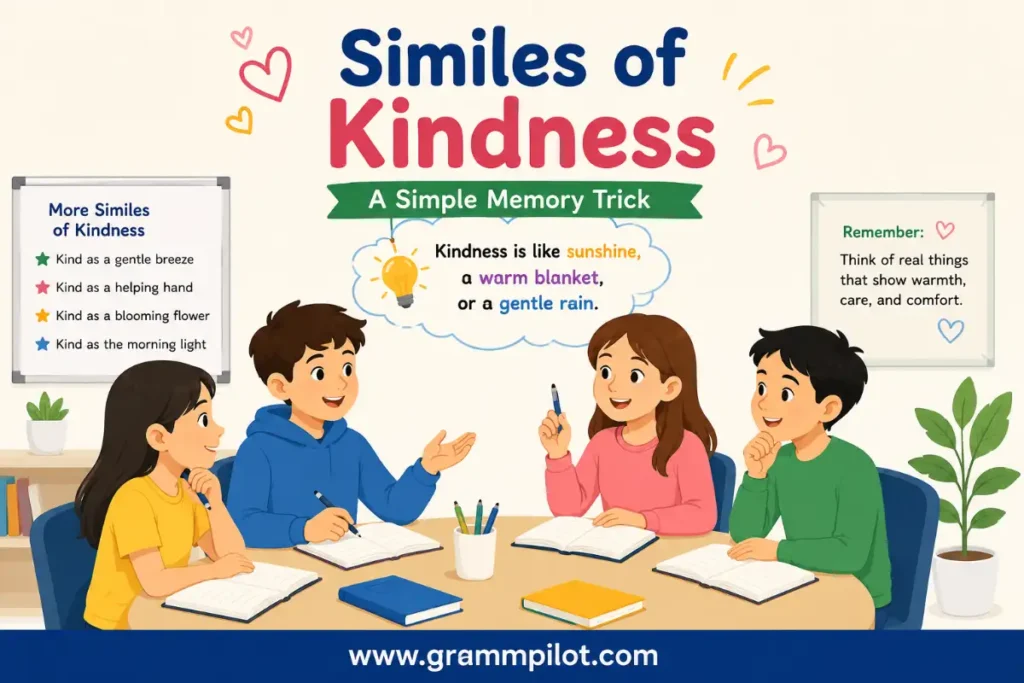
Think about the word kindness. Most people connect kindness with warmth, light, and comfort.
When creating your own simile, ask yourself one question: What everyday object makes people feel safe, happy, or cared for?
Your answer becomes the comparison.
Examples:
- like a warm fireplace
- like sunshine after rain
- as gentle as a lamb
- as comforting as home
- like a helping hand
- as welcoming as an open door
This simple method helps you create original Similes of Kindness instead of memorizing long lists.
Conclusion
Learning Similes of Kindness is a simple way to make your writing more colorful, meaningful, and memorable. Instead of repeatedly using words like kind or nice, you can create vivid pictures with comparisons such as as gentle as a lamb, like sunshine after rain, or like a helping hand. The best similes are easy to understand, fit the situation, and help readers connect with the emotions behind your words.
Whether you’re writing a school essay, speech, story, greeting card, or social media post, the right comparison can leave a lasting impression. Keep practicing different expressions, choose images that match your message, and don’t be afraid to create your own original comparisons. With a little creativity, Similes of Kindness can make every piece of writing warmer, stronger, and more engaging.
Frequently Asked Questions
1. What are Similes of Kindness?
Similes of Kindness are comparisons that describe a caring or gentle person by using like or as. They help readers imagine kindness through familiar images.
2. What is the best simile for kindness?
There isn’t just one best simile. Popular choices include as gentle as a lamb, like sunshine after rain, as warm as the morning sun, and like a helping hand.
3. What’s another way to say someone is kind?
You can describe someone as compassionate, caring, thoughtful, warm-hearted, considerate, or generous. A simile can make the description even more vivid.
4. Can I use similes in school essays?
Yes. Similes make essays more interesting when they fit naturally. Avoid using too many in one paragraph, and choose comparisons that support your ideas.
5. Are similes and metaphors the same?
No. A simile uses like or as to compare two things, while a metaphor says one thing is another without using those comparison words.
6. Can I create my own similes?
Absolutely. Many of the best similes are original. Think about objects, places, or experiences that remind people of warmth, care, or comfort, then connect them using like or as.
7. Why do writers use Similes of Kindness?
Writers use Similes of Kindness because they make descriptions more vivid, help readers picture emotions, and create stronger connections with characters and ideas.