
Grass is one of the most familiar sights in nature, yet it can create surprisingly rich imagery in writing. A green lawn can suggest freshness, peace, growth, or summer. Dry grass can bring feelings of age, heat, neglect, or sadness. Tall grass can feel wild and mysterious, while soft grass can suggest comfort and calm.
Grass Similes compare grass to something else using words such as like or as. These comparisons help readers picture its color, texture, movement, sound, or condition. Instead of simply saying “the grass was green,” a writer can say, “the grass was as green as emeralds after the rain.” The best comparison depends on what you want readers to notice. Are you describing bright spring grass, a dry field, grass moving in the wind, or a child lying on a lawn? This guide covers all of these situations, with real examples for poems, stories, essays, school assignments, and everyday descriptions.
For more examples that bring writing to life, check out [Sky Similes].
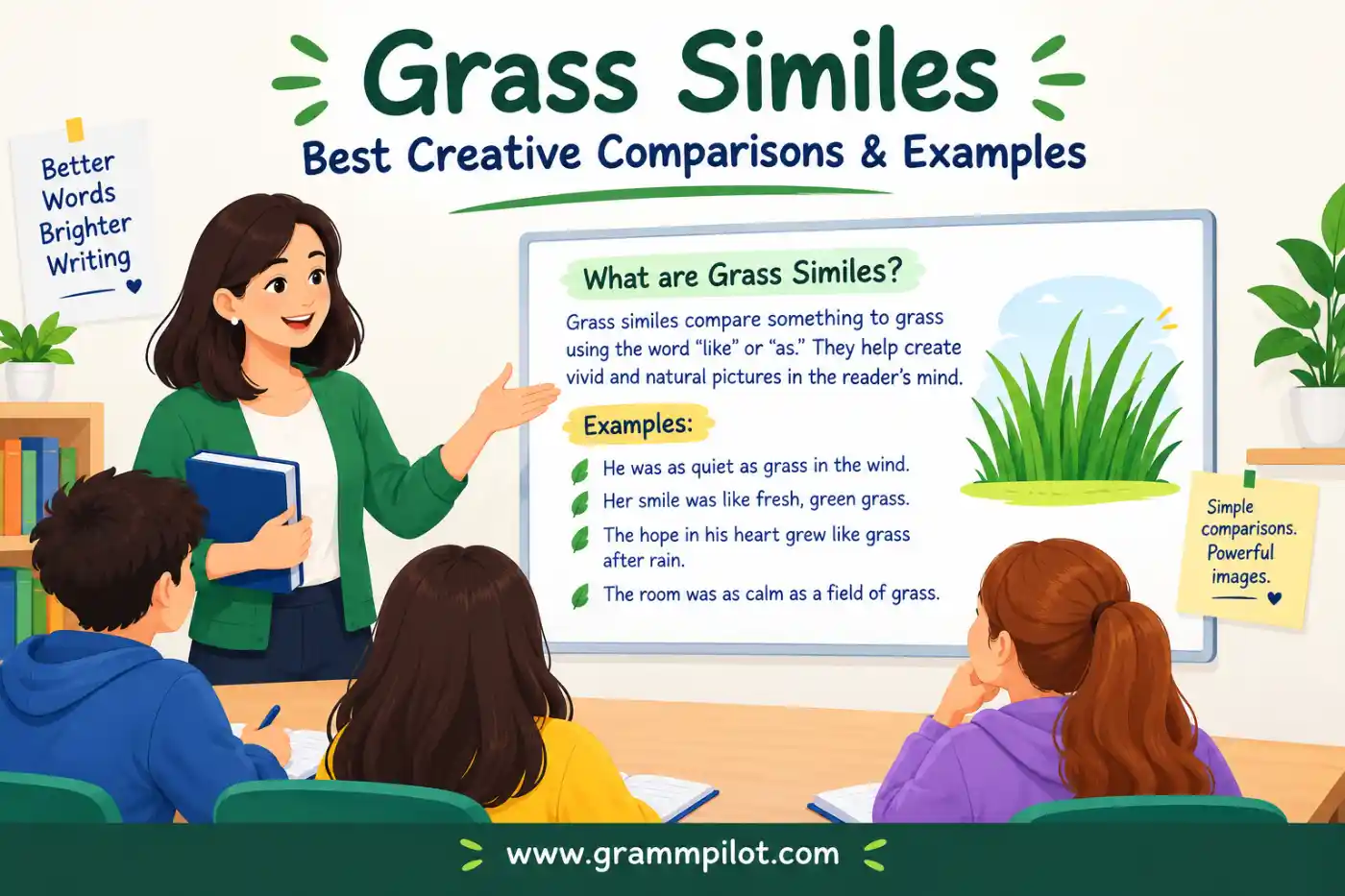
What is a simile for grass?
A simile compares two different things using like or as.
For example:
- The grass was as green as emeralds.
- The field moved like a sea beneath the wind.
- The wet grass sparkled like tiny pieces of glass.
The comparison gives readers a clearer mental picture. Instead of describing every detail literally, a writer connects grass to something familiar.
For example:
Plain:
The grass was very green.
With a simile:
The grass was as green as fresh emeralds.
The second sentence gives the reader a stronger visual image.
Best similes for green grass
Green is probably the first quality people associate with healthy grass. You can compare its color to many familiar green objects.
- The grass was as green as emeralds.
- The lawn looked like a green carpet spread across the yard.
- The field was as green as fresh leaves in spring.
- The grass shone like green silk beneath the morning sun.
- The meadow looked like a sea of green stretching toward the hills.
- The new grass was as bright as spring leaves.
- The lawn was green like a painter’s fresh canvas.
- The field glowed like a green jewel beneath the sunlight.
- The grass looked as fresh as newly opened leaves.
- The hillside was like a giant green blanket.
These examples work well in:
- Nature writing
- Children’s stories
- Poems
- Descriptive essays
- Travel writing.
Similes for soft grass
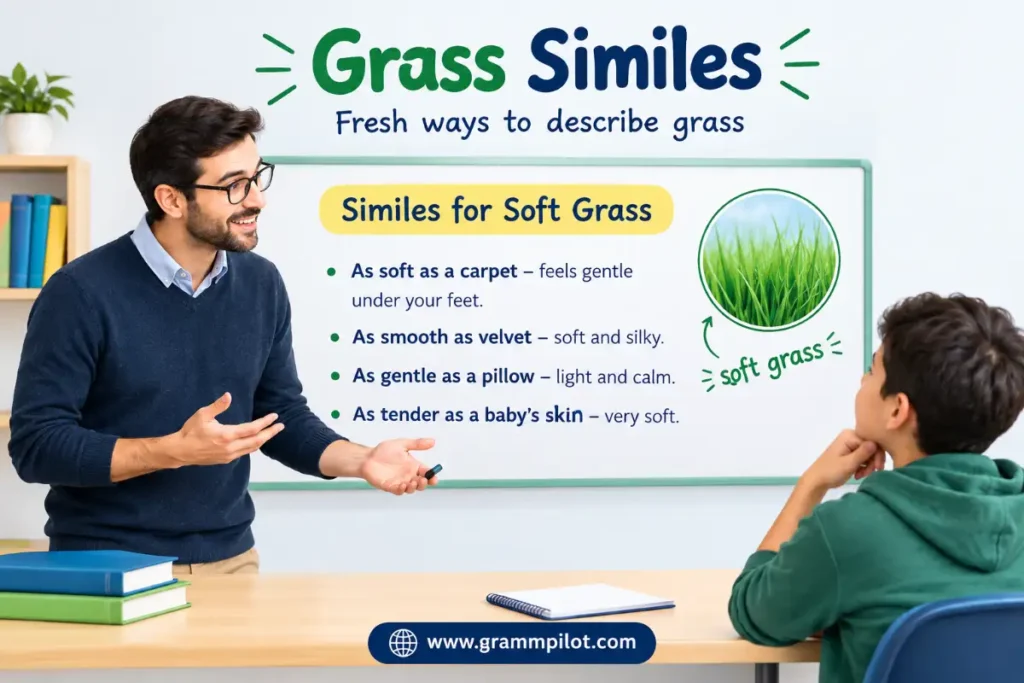
Soft grass often creates feelings of comfort, safety, and relaxation.
- The grass felt as soft as a feather pillow.
- The lawn was like a green carpet beneath her feet.
- The grass felt as smooth as velvet.
- The meadow was like a soft blanket spread across the earth.
- The fresh grass brushed his skin like silk.
- The lawn felt as gentle as cotton.
- The grass cushioned her feet like a soft mattress.
- The meadow felt like a natural bed beneath the trees.
These comparisons work especially well in scenes where characters are resting, playing, reading, or having a picnic.
Similes for wet grass
Rain and morning dew can completely change the appearance of grass.
- The wet grass sparkled like tiny diamonds in the sunlight.
- Dew covered the blades like beads of glass.
- The lawn glittered like a field of jewels after the rain.
- The grass was wet like freshly washed silk.
- Drops clung to the blades like tiny crystal pearls.
- The meadow shone like a mirror scattered across the earth.
- Morning dew rested on the grass like silver beads.
- The wet blades bent like thin green ribbons covered in glass.
These examples are useful for sunrise scenes and descriptions of rainy mornings.
Similes for dry grass
Dry grass creates a very different mood.
It may suggest:
- Heat
- Drought
- Age
- Neglect
- Autumn
- Fire
- Sadness
Examples:
- The dry grass was as yellow as old straw.
- The field looked like a golden blanket left in the sun.
- The brittle grass cracked like thin pieces of paper.
- The meadow was as dry as a forgotten basket of hay.
- The grass crumbled like old parchment beneath his feet.
- The field looked like a faded painting.
- The yellow grass stretched across the land like a worn-out carpet.
- The dry blades were as fragile as dead leaves.
- The meadow looked like a field of golden needles.
- The grass stood under the heat like straw beneath a furnace.
These comparisons can create a warmer or more serious atmosphere.
Similes for brown grass
Brown grass can suggest the end of summer, drought, poor care, or seasonal change.
- The lawn was as brown as old parchment.
- The grass looked like straw scattered across the ground.
- The field was as dry as a forgotten haystack.
- The brown blades stretched like faded threads across the earth.
- The lawn looked like a green painting left too long in the sun.
- The grass was as dull as dusty paper.
- The field resembled a faded golden blanket.
- The blades crunched like dry twigs beneath his shoes.
The comparison should match the reason the grass has turned brown.
Similes for grass after rain
Rain can make grass look brighter and cleaner.
- The grass looked as fresh as newly washed leaves.
- The lawn glittered like emeralds after the rain.
- The field shone like a green mirror beneath the clouds.
- The wet grass smelled like the earth waking after a long sleep.
- The meadow sparkled like thousands of tiny jewels.
- The blades stood upright like soldiers after a refreshing shower.
- The grass looked as bright as spring after a storm.
- The field seemed like a green carpet freshly cleaned by nature.
Rain-based imagery is especially useful in descriptive writing.
Similes for grass in spring
Spring is associated with growth, freshness, and renewal.
- The new grass was as bright as young leaves.
- The field looked like a green blanket being spread across the earth.
- Fresh grass appeared like tiny green sparks after the rain.
- The meadow was as fresh as a newly opened garden.
- The hillside turned green like a painting coming to life.
- Young blades rose like tiny fingers reaching toward the sun.
- The grass covered the field like a soft green quilt.
- The meadow looked as lively as a garden after spring rain.
These comparisons are ideal for writing about renewal and new beginnings.
Similes for grass in summer
Summer grass can be bright, warm, dry, or thick depending on the setting.
- The summer lawn was as green as a fresh painting.
- The grass shimmered like silk beneath the hot sun.
- The field stretched out like a green ocean under the blue sky.
- The dry meadow looked like a sea of golden straw.
- The grass smelled like warm earth after a long afternoon.
- The lawn felt like a soft carpet beneath bare feet.
- The field waved like an endless green flag in the breeze.
Similes for grass in autumn
Autumn can change grass from bright green to dull green, yellow, or brown.
- The grass looked like an old green coat beginning to fade.
- The field was as golden as late-afternoon sunlight.
- The grass lay beneath the leaves like a forgotten carpet.
- The meadow looked like a painting slowly losing its color.
- The yellow grass stretched like threads across the cold earth.
- The field seemed as quiet as an empty park.
Autumn imagery can create a reflective or slightly sad mood.
Similes for grass in winter
Winter grass can look pale, frozen, flattened, or covered in frost.
- The frozen grass was as stiff as wire.
- Frost covered the blades like tiny crystals.
- The field looked like a faded green blanket beneath the frost.
- The grass was as cold as glass.
- The frozen meadow glittered like a field of silver needles.
- The pale grass stood like thin threads beneath the winter sky.
- Frost rested on the blades like powdered sugar.
These comparisons can help create a quiet winter atmosphere.
Funny similes for grass
Not every simile needs to sound serious or poetic. Funny comparisons can make children’s stories, social posts, and creative writing more playful.
- The grass was as tall as a teenager’s excuses for not mowing it.
- The lawn looked like a green monster that needed a haircut.
- The grass grew like it had somewhere important to be.
- The weeds stood up like tiny rebels refusing to surrender.
- The lawn looked like someone had spilled green paint everywhere.
- The grass was as thick as a shaggy carpet nobody wanted to vacuum.
- The blades waved like hundreds of tiny hands saying hello.
- The backyard looked like a jungle designed by a lazy gardener.
Humor works best when the comparison is unexpected but easy to understand.
Beautiful similes for grass
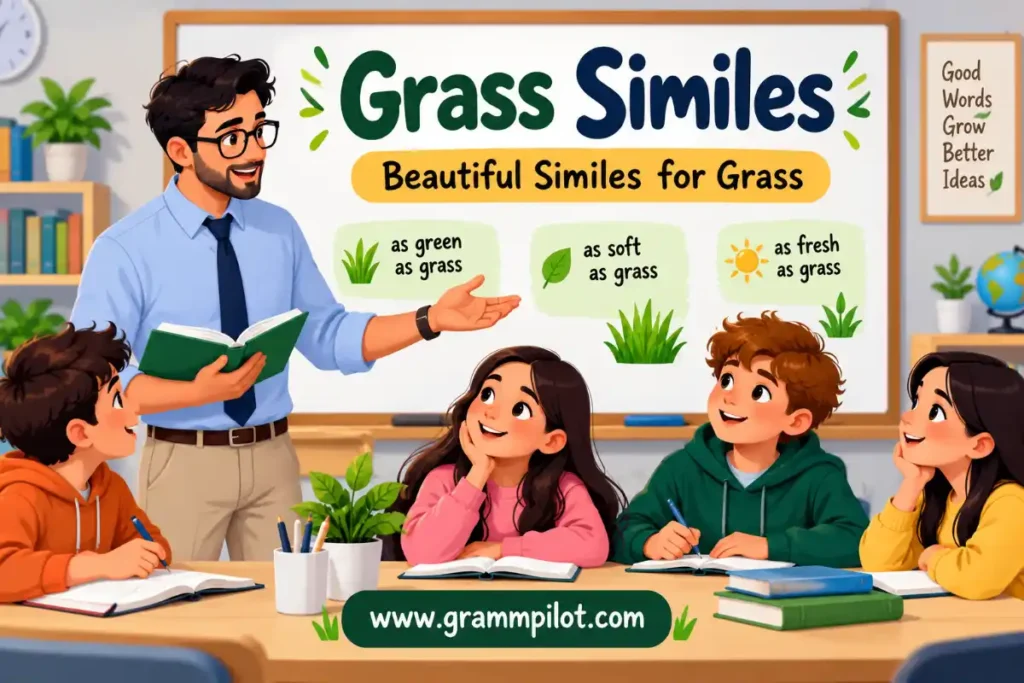
For poetry and elegant descriptions, softer comparisons often work well.
- The meadow shimmered like green silk beneath the morning sun.
- The grass moved like waves beneath a silver breeze.
- The field glowed like an emerald sea at sunset.
- Dew rested on the blades like diamonds on green velvet.
- The meadow stretched like a soft blanket beneath the mountains.
- The grass whispered like a distant crowd speaking softly.
- The field danced like ribbons floating through the air.
- The green hillside rolled like a peaceful ocean under the sky.
These examples focus on beauty rather than exact physical description.
Similes for grass in a poem
Poetry allows more freedom than ordinary description.
Consider these lines:
- The grass danced like waves beneath the moon.
- Dew clung to each blade like tiny stars.
- The meadow stretched like a green ocean toward the horizon.
- The wind moved through the field like a whispered song.
- The young grass rose like hope after winter.
- The dry field cracked like an old memory.
A poem doesn’t need every comparison to be literal. The goal is to create a feeling or image.
Similes for grass texture
Texture is another useful feature to describe.
Soft texture
- The grass felt like velvet beneath her hands.
- The blades were as soft as feathers.
Rough texture
- The dry grass felt like rough paper.
- The blades scratched his skin like tiny bristles.
Brittle texture
- The dead grass broke like thin sticks.
- The dry blades snapped like old straw.
Wet texture
- The grass felt like cool silk beneath bare feet.
- The wet blades clung to his shoes like tiny ribbons.
Specific sensory details make descriptive writing stronger.
Similes for grass that looks like a carpet
The carpet comparison is common because lawns often cover the ground evenly.
Examples:
- The lawn was like a thick green carpet.
- The meadow spread out like a giant carpet beneath the trees.
- The grass looked as smooth as a freshly laid carpet.
- The field was like a soft green rug stretching to the hills.
- The lawn covered the yard like a blanket of green fabric.
The comparison works best when the grass is short, thick, and even.
Similes for grass that looks like an ocean
This comparison works especially well for tall grass moving in the wind.
Examples:
- The field moved like an ocean under a strong breeze.
- The grass rolled like waves across the hillside.
- The meadow looked like a green sea reaching toward the horizon.
- The tall blades swayed like waves on a restless ocean.
- The field rippled like water beneath the wind.
The comparison becomes stronger when the field is large enough to create a wave-like effect.
Similes for grass that looks like a blanket
A blanket comparison suggests softness, coverage, and comfort.
Examples:
- The grass covered the earth like a green blanket.
- The meadow spread across the valley like a soft quilt.
- Fresh grass wrapped the hillside like a bright green blanket.
- The lawn looked like a thick rug laid over the ground.
- The field rested beneath the trees like a soft natural bed.
These images work well for peaceful scenes.
Similes for grass and sunlight
Light can change how grass looks.
- The grass sparkled like emeralds beneath the sun.
- The field glowed like green glass in the morning light.
- Dew shone on the lawn like tiny stars.
- The meadow shimmered like silk under golden sunlight.
- The blades flashed like little mirrors in the sun.
- The green field glowed like a jewel beneath the afternoon sky.
Sunlight-based imagery is useful for creating a warm and cheerful mood.
Similes for grass and moonlight
Moonlight creates a cooler and more mysterious effect.
- The grass shimmered like silver threads beneath the moon.
- The meadow looked like a sea of dark green under moonlight.
- Dew sparkled like tiny stars on the grass.
- The field appeared like a silver carpet in the night.
- The blades glowed like thin pieces of glass beneath the moon.
These examples can fit fantasy, mystery, and nighttime stories.
Similes for grass and fire
Dry grass can be compared to fire, especially when it is yellow or golden.
- The dry field looked like a sea of golden flames.
- The yellow grass glowed like fire beneath the sunset.
- The field spread across the valley like a blanket of golden sparks.
- The dry blades shimmered like tiny flames in the wind.
Use fire imagery carefully. It can suggest beauty, danger, heat, or destruction depending on the surrounding context.
Similes for grass and animals
Nature comparisons don’t have to be limited to objects.
Examples:
- The grass moved like a herd of animals running across the field.
- Tiny blades stood upright like rabbits listening for danger.
- The tall grass bent like birds lowering their wings.
- The meadow rippled like fish moving beneath water.
Animal comparisons can make nature descriptions feel lively.
Common mistakes when writing similes about grass
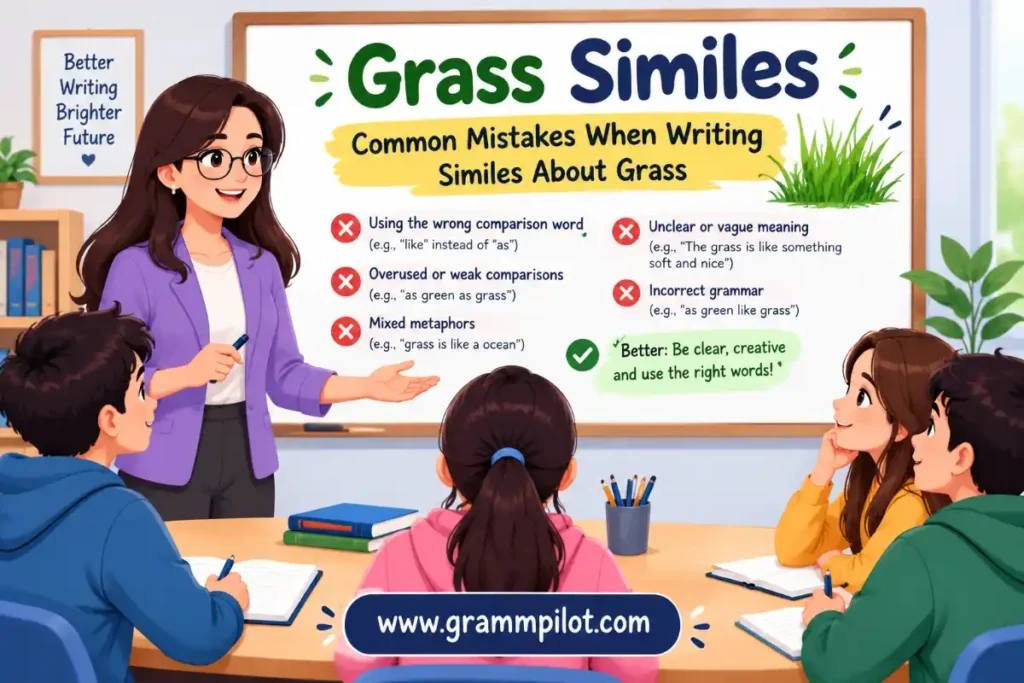
Mistake 1: Using a comparison that doesn’t fit
Bad: The soft grass was like broken glass.
Broken glass suggests sharpness, not softness.
Better: The soft grass was like velvet.
Mistake 2: Mixing too many comparisons
Awkward: The grass was like an ocean, carpet, blanket, fire, and emerald sea.
Choose one strong image.
Mistake 3: Making every sentence figurative
Too many similes can make writing feel crowded.
Instead: The field stretched across the valley. The grass moved like waves in the wind. Birds flew above the trees.
The simple sentence gives the comparison room to stand out.
Mistake 4: Using clichés without adding detail
“Grass was like a green carpet” is clear but familiar.
You can make it more specific: The freshly cut grass looked like a thick green carpet beneath the porch.
Mistake 5: Forgetting the purpose
A simile should help the reader see, hear, feel, smell, or understand something.
If the comparison doesn’t add anything, remove it.
What are the best words to compare grass with?
Different qualities call for different images.
| Grass Quality | Useful Comparison |
|---|---|
| Green | Emeralds, jade, leaves |
| Soft | Velvet, silk, feathers |
| Tall | Wall, curtain, waves |
| Moving | Ocean, ribbons, flags |
| Wet | Glass, diamonds, pearls |
| Dry | Straw, paper, twigs |
| Yellow | Gold, wheat, sunlight |
| Thick | Carpet, blanket, rug |
| Fresh | Spring leaves, new garden |
| Frozen | Glass, silver, wire |
| Quiet | Sleeping field, soft blanket |
| Wild | Jungle, green wall, untamed sea |
This gives you a quick starting point when you’re stuck.
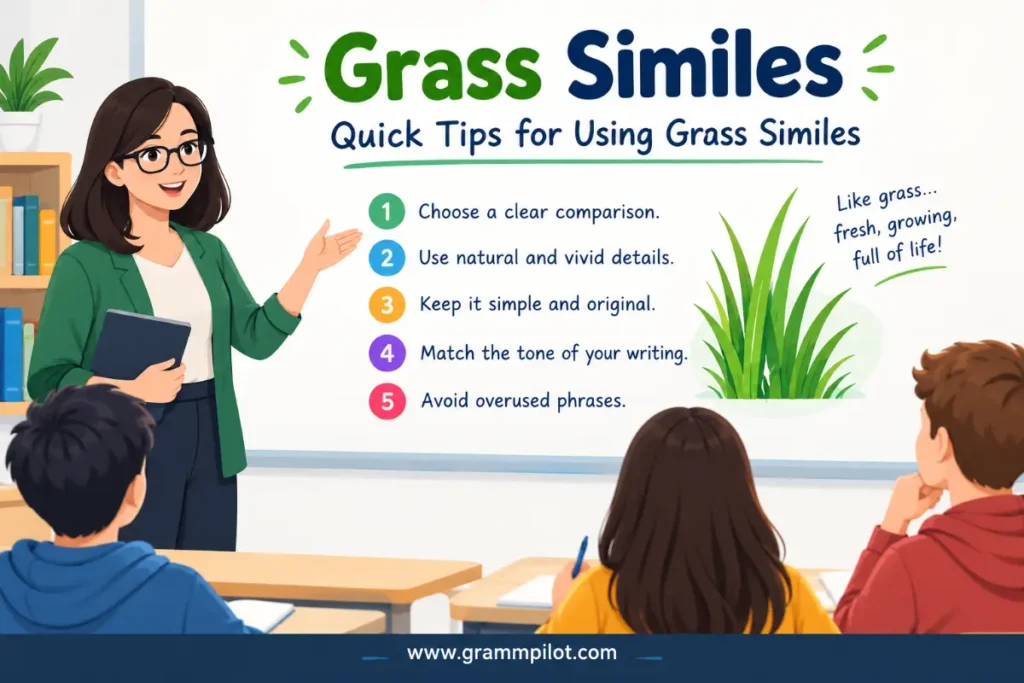
Quick tips for using grass similes
- Describe one main quality at a time.
- Use like or as to create a clear simile.
- Match the image to the grass’s actual condition.
- Use sensory details.
- Think about the season.
- Consider the weather.
- Match the mood of your scene.
- Avoid stacking too many comparisons.
- Give familiar comparisons a fresh detail.
- Don’t force a simile into every sentence.
- Read your sentence aloud.
- Remove any comparison that doesn’t add meaning.
Conclusion
Grass Similes can turn an ordinary landscape into something readers can see and feel. A green field can become an emerald sea, a freshly cut lawn can resemble velvet, and tall blades can move like waves beneath the wind. Dry grass can suggest heat and age, while wet grass can sparkle like tiny jewels after rain.
The best comparison isn’t always the fanciest one. Choose an image that matches the grass and the feeling of your scene. Think about color, texture, movement, sound, season, and weather. Then connect the grass to something familiar using like or as. With a little practice, even a simple patch of grass can become a memorable part of a poem, story, essay, or description.
Frequently Asked Questions
1. What is a good simile for grass?
A simple simile is “The grass was as green as emeralds.” Other useful comparisons include grass being like a green carpet, soft velvet, or waves moving across the field.
2. What is a simile for green grass?
Green grass can be compared to emeralds, jade, fresh leaves, or a green carpet. For example, “The meadow was as green as fresh spring leaves.”
3. What is a simile for grass moving in the wind?
A common and effective comparison is, “The grass swayed like waves on the ocean.” It shows the smooth, rolling movement of a large field.
4. What’s another way to describe soft grass?
You can describe soft grass as being “like velvet,” “like silk,” or “as soft as feathers.” These comparisons help readers imagine its smooth texture.
5. What is a simile for dry grass?
Dry grass can be compared to straw, old paper, brittle leaves, or thin twigs. For example, “The dry grass cracked like old paper beneath his feet.”
6. How do you use a grass simile in a sentence?
Put the comparison directly into a descriptive sentence, such as “The wet grass sparkled like tiny diamonds after the rain.” The simile should explain a quality such as color, movement, texture, or appearance.
7. What is a poetic simile for grass?
A poetic example is, “The meadow shimmered like green silk beneath the morning sun.” It creates a visual image while giving the scene a calm and beautiful mood.